Emmerthal (ots) — Germany's mid-market is facing a massive leadership problem. According to the German Mid-Market Association (DMB), around 231,000 companies are currently looking for new leadership or investors in the coming years — many of them so far without success. And that's just the beginning: the German Chamber of Industry and Commerce (DIHK) expects up to 560,
000 businesses to be in need of succession or investment by 2028. This so-called succession gap is reaching record levels, with far-reaching consequences for employment, innovation, and the survival of entire business landscapes.
Very few companies fail because of bad numbers; they fail because of a lack of leadership. This article explains why experienced interim leaders are becoming the rescue for many companies today, how they bridge crises, and how they build structures that work even without a patriarch at the helm.
The Mid-Market in Transition
The looming generational handover confronts the mid-market with a shift that goes far beyond pure business economics. The cause isn't just the rising average age of owners, but above all the lack of suitable successors. In many family businesses, the handover fails due to emotional ties, insufficient preparation, or structures that have grown over decades. The future often hinges on a single person; if that person is gone, a dangerous power and decision-making vacuum emerges.
The consequences are severe: innovation grinds to a halt, talent moves on, and investors lose confidence. An individual problem quickly turns into a structural crisis that threatens the backbone of the German economy.
When Structures and Systems Are Missing
Many mid-market companies struggle less with the market than with themselves — processes are poorly documented, knowledge lives in people's heads instead of systems, and responsibilities remain unclear. What worked “by gut feeling” for years becomes a risk during the handover phase.
This becomes especially dangerous during digital transformation: companies without clear structures and governance lose speed, transparency, and ultimately their future viability.
Digital maturity therefore becomes a decisive factor. Many mid-market companies still run on spreadsheets and paper files instead of managing with data. For potential buyers or successors, that's a warning sign: too little efficiency, too much risk. The result is lower valuations, collapsed acquisitions, and growing uncertainty. Those who invest in modern systems, on the other hand, secure long-term stability.
Interim Management as a Bridge to the Future
When a leader suddenly steps down or the handover stalls, experienced interim managers secure the company's ability to act in the short term, while also laying the groundwork for lasting renewal.
An interim CEO is not a stopgap, but a strategic tool. In critical phases, they provide stability, the ability to act, and modernization. Drawing on experience across various industries, they quickly identify weak points and follow through consistently on necessary changes. Within a short time, they can modernize finances, processes, communication, and the entire value chain, introduce digital tools, and clarify responsibilities. This creates transparency, efficiency, and trust — internally and externally. Interim managers also make decisions that are often delayed too long internally, and build structures that work independently of any single person.
Companies that rely on professional transitional leadership secure not only their ability to act, but also their value. An interim CEO stabilizes day-to-day operations, creates clear structures, and strengthens the trust of employees, customers, and investors — generating new momentum in a phase that would otherwise be marked by uncertainty. This shows up directly in the M&A market: businesses with modern leadership and clear processes demonstrably achieve higher valuations. Interim managers bring exactly the outside perspective needed for this: they break routines, create orientation, and turn standstill into momentum.
About Gert Löhmer:
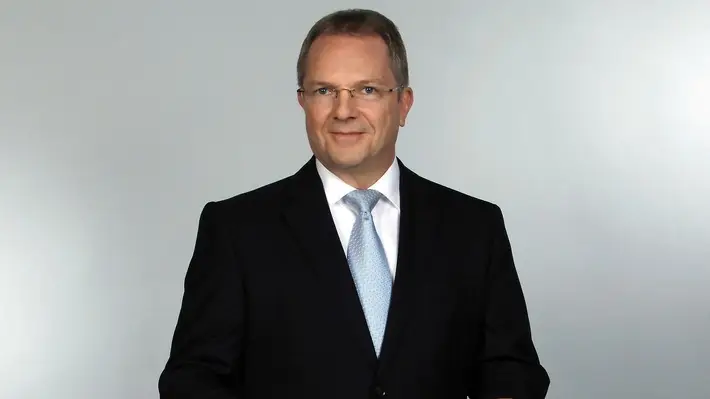
Gert Löhmer is the founder and managing director of GL Consulting & Interim. With his team, he specializes in leading machinery and plant engineering companies, tool makers, contract manufacturers, and other manufacturing businesses out of crisis — operationally and strategically — and making them future-proof. Among other things, he focuses on optimizing internal processes, communication, and culture. This is how he sets the course for a successful future. More information at: https://loehmer-consulting.com