
Emmerthal.
High energy costs, growing bureaucracy, a shortage of skilled workers, unhealthy levels of social security contributions, a weak economy, unstable supply chains, global challenges and uncertainties, slowing globalization, recession, deindustrialization trends, market shifts at unprecedented speed — German industry is fighting on every front.
Production figures are falling, sites are facing serious difficulties, and many companies are struggling to survive. Those who fail to act correctly now may not survive the crisis.
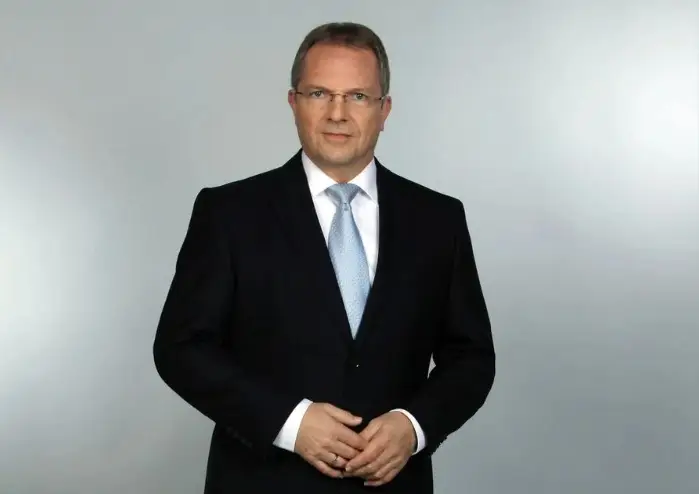
“I keep seeing companies that wait far too long, hoping for things to improve instead of taking early, active countermeasures,” says Gert Löhmer, crisis manager and expert in business leadership. For many management teams, the string of crises and pressures for change, sometimes overlapping, have made for an extremely challenging few years. Managing the many necessities for change on top of day-to-day business is a monumental task. Temporarily increasing management capacity over a certain period is therefore one option.
“What's often missing is a clear plan, the management capacity, and the courage to follow through on necessary changes.” Gert Löhmer explains below what approach and strategies are needed now, and how companies can avoid their biggest mistakes while setting course for a secure future instead.
The biggest insight many business owners are missing is the need to seek support early. The rule here: the earlier, the better. Every day an owner hesitates makes the road to recovery longer, more expensive, and more painful. A fitting metaphor illustrates the problem: anyone who only goes to the dentist once the pain becomes unbearable suffers the most in the end, and recovery becomes more involved, more painful, and more drawn out.
Experienced interim managers offer help in a crisis. It therefore makes sense to significantly increase the necessary management capacity for a limited period. This is achieved by bringing in an experienced interim manager who ensures the high speed of execution urgently needed to implement necessary measures. The focus here is on “execution.” A time- and money-consuming analysis is usually not necessary. In acute phases, a brief assessment by an experienced leader is enough to initiate targeted corrective measures.
Experienced interim managers offer help in a crisis. It therefore makes sense to significantly increase the necessary management capacity for a limited period. This is achieved by bringing in an experienced interim manager who ensures the high speed of execution urgently needed to implement necessary measures. The focus here is on “execution.” A time- and money-consuming analysis is usually not necessary. In acute phases, a brief assessment by an experienced leader is enough to initiate targeted corrective measures.
Practical tip:
One important starting point is often to focus consistently on the most profitable products and services. Identify high-margin segments and clear loss-making offerings from your portfolio. If some of your customers depend on certain products, however, don't leave them in the lurch — instead, talk to them right away. Explain the need for higher prices and work together to find solutions, such as the customer supplying part of the materials or optimizing purchasing behavior over a longer period. The same applies to suppliers, with whom you can discuss your purchasing behavior or a consignment-stock solution to lower costs and inventory overhead, and even reduce delivery times.
In uncertain times, resolute, transparent communication with all stakeholders is more important than ever. Many leaders underestimate how much uncertainty and a lack of clarity can paralyze a workforce. Those who hesitate or send mixed signals lose the team's trust and motivation. Decision-making works differently in bad times than in good times. Change and transformation always demand a high degree of empathy, discipline, and attention. Business owners should not underestimate this. Leading through an acute crisis is far from trivial, and not every leader has had the chance to learn it from the ground up.
Crisis communication means: clear facts, realistic assessments, and concrete measures. Employees need to understand where the company stands, what to expect, and what strategy is being pursued. This builds trust and reduces resistance to change.
An experienced crisis manager at the side of company leadership is worth their weight in gold in difficult situations. They minimize damage under pressure from time, liquidity, and budget constraints. At the same time, management benefits from this experience, becoming even better prepared for the future. Bringing in a qualified, experienced interim manager always pays off: fast, targeted measures contain problems much more quickly and limit economic damage sooner.
Practical tip:
Set the right priorities. Focus, for example, on minimizing complaint rates and ensuring excellent on-time delivery, so you don't lose customers and your reputation as a reliable partner is strengthened. This also helps sales. Check your entire supply chain. That achieves far more than excessive, damaging cost cutting.
In many cases, those affected lack a clear company goal in challenging situations. Many business owners have overly optimistic expectations while failing to use the opportunities available to them. Often, people are so preoccupied with themselves that they don't notice they've lost focus on the customer. Yet it's precisely the changing needs of customers that should be taken into account, alongside strategic conversations with suppliers. Anyone who “just” wants to cut costs while neglecting business partners is making a serious mistake.
Practical tip:
Develop a clear vision at the first and second leadership levels of which products, services, and offerings can contribute to your success. You should ask yourself: “With which products or services are we profitable?”, “What can we do better than the competition?”, “What will we be earning money from in one, three, and five years, in order to fund innovation, upskilling our workforce, introducing AI, and other process improvements?”
The Chinese military strategist and philosopher Sun Tzu already wrote: “Without a clear goal, no one finds the way there. A strategy that is never implemented is the slowest path to victory. Implementation without any plan at all means defeat from the very start.”
In other words: define a vision first, then look at your capacity and develop strategies by asking questions such as “What budget will be available to us, and when, to reach our goals in one, three, five years?”, “What capacity, what specialists do we need internally and possibly externally, to reach which intermediate goals and when, in order to reach the overall goal?”, “Who can help us reach the goal faster and/or more cost-effectively?”
You should also consider which investments are needed to actively shape your own future security. Digitalization, automation, the use of AI, or new business models can make the difference. Strategic planning requires a systematic approach. It's not just about cutting costs, but about defining a viable business model for the future.
In the end, there are often several possible strategies. You then choose the most suitable one — for example, the one that requires the fewest financial resources but takes longer to reach the goal, or the one that is more demanding but gets you there fastest. Implementation planning follows. It's advisable to bring experienced employees along on this “journey” — specifically, everyone who is genuinely committed and wants to carry the company forward and rally the rest of the workforce. Communication, clarity, and transparency play a major role throughout this entire phase. With a clear sense of direction and motivation, a workforce is capable of moving mountains.
Practical tip:
An iterative, retrospective approach is often helpful when determining goals and strategy. For example, once you have defined your vision for the year 2030, work backwards and ask yourself: what conditions need to be in place by 2029 for the 2030 goal to be achievable? Then consider what needs to happen in 2028 to properly prepare for 2029. This process continues — and if 2026 and 2027 also line up, wonderful. If not, keep moving back and forth. This approach brings clarity faster, and lets you reach your goals with much higher probability and with greater confidence that they are realistic.
Standing still in a crisis is not an option. Companies that act decisively now, bring in external support in time, and reset their strategic course have the best chance of emerging from the crisis stronger. An interim crisis manager not only brings valuable experience, but also adds speed to execution — and that can make all the difference.