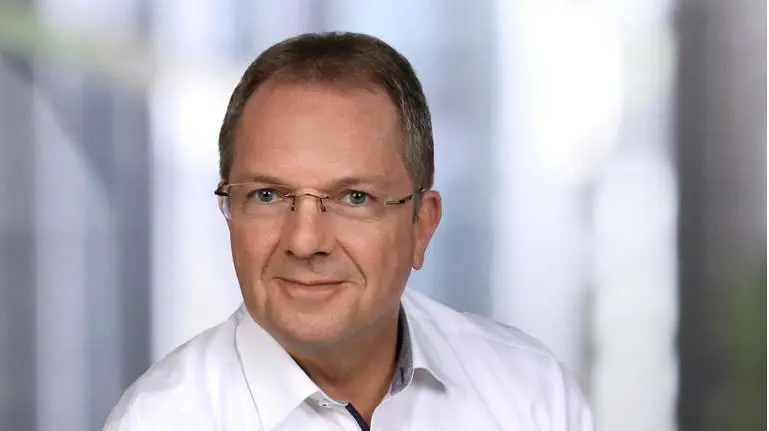
Emmerthal (ots) — Crises call for a clear course and fast action — and this is exactly where an interim manager provides valuable support. Yet this potential remains unused in many companies. Gert Löhmer of GL Consulting & Interim addresses precisely this issue: as an interim manager, he gets companies back on track — not just by advising, but by practically supporting management and taking on responsibility.
His approach: fast execution, clear communication, lasting stability. Find out here which objections Gert Löhmer hears most often — and why they don't hold up.
Many companies suffer from a fatal misjudgment: misguided frugality leads them to forgo urgently needed external support. Especially in the current economic climate, where agility and adaptability are vital for survival, this mindset proves to be a dangerous dead end. Instead of using external expertise, companies rely on overstretched internal structures — squandering the scarcest resource of all: time. Yet the damage caused by this resistance is many times greater than the supposed cost savings. “Anyone who thinks they're buying themselves breathing room through false economy ends up paying twice,” warns Gert Löhmer, managing director of GL Consulting & Interim. “Because either it later becomes genuinely expensive to catch up on what was neglected — or, in the worst case, the company soon faces collapse.”
“Crises don't call for endless meetings and PowerPoint battles — they call for action and increased management capacity. That's exactly where an interim manager comes in,” he adds. Unlike traditional consultants, who usually just issue recommendations, the entrepreneur reinforces the management of struggling machinery and industrial companies and thereby takes on operational responsibility. With GL Consulting & Interim, he follows a clearly structured approach: define goals, clarify authority, implement immediately. He steps directly into day-to-day operations, stabilizes processes, and drives lasting transformation. His focus is not just on the numbers, but above all on the people within the company. His goal: not just short-term stabilization, but long-term crisis resilience through stronger leaders and optimized processes. Yet despite the obvious benefits of external support, many companies have reservations. Gert Löhmer repeatedly encounters the same two main objections from his clients — and he has clear answers to both.
Many companies shy away from the supposedly high cost of an interim manager. But refusing external help to save money usually amounts to: “We don't have the money to fix the car — so let's just drive it into a wall instead.” Especially in machinery and industry, crises trigger a dangerous chain reaction: leaders without crisis experience make hesitant or wrong decisions, uncertainty spreads, and without a clear strategy the company loses valuable time — the most expensive resource in any crisis.
On top of that, restructuring processes in Germany are often made more difficult by complex legal frameworks. The longer companies wait, the more expensive the rescue becomes — if it's even still possible at all. In a crisis, action needs to be faster and more radical than many decision-makers are used to — and anyone relying on consultants who spend months producing analysis risks total standstill. An experienced interim manager, by contrast, acts immediately and gives the company breathing room before it's pulled into the downward spiral toward insolvency. So the real question isn't how expensive an interim manager is — it's how expensive hesitation ultimately turns out to be.
The second most common argument against bringing in an interim manager often comes from the works council and goes: “We can't lay people off or put them on short-time work on one hand, and pay an expensive outsider on the other.” This view is understandable, but it misunderstands the actual role of an interim manager in a crisis. In fact, their involvement can prevent even more drastic cuts.
In times of crisis, many companies reflexively resort to cost-cutting instead of working specifically toward sustainable restructuring. Short-time work and layoffs, however, are merely symptoms of a deeper problem: missing strategic direction, inefficient processes, or an unclear vision for the future. An experienced interim manager addresses exactly this: optimizing structures, protecting jobs, and ensuring the company becomes future-proof again. An open conversation with the works council plays a central role here. Once it becomes clear that this isn't about “bringing in an expensive outsider,” but about building a bridge to a secure future, acceptance rises significantly. After all, one crucial question remains: what good is short-term saving if it costs everyone their job in the long run?
In a crisis, inaction is the most expensive mistake: every day a company refuses external help for cost reasons costs more than bringing in an expert with purpose. Especially under pressure — whether from tight liquidity or a lack of time — interim management can become the decisive factor for a company's future. Gert Löhmer is exactly this kind of interim manager: rather than just observing and advising, he actively takes on responsibility and guides the company through the crisis. With GL Consulting & Interim, he relies on fast decisions, clear communication, and close involvement of the workforce.
Whether it's optimizing processes, repositioning strategically, or strengthening leadership — Gert Löhmer doesn't just bring numbers into balance, but people and structures too. And once his mandate ends, what remains isn't just a rescued company, but an organization that has emerged from the crisis stronger.